Most parents start thinking about babyproofing the day their baby rolls somewhere unexpected. Then crawling arrives, and suddenly every cabinet, cord and doorway looks different. The easiest way to handle it is to do the big things before your baby is mobile, around four to six months, and then look again every time they learn a new skill.
One trick that works: get down on your hands and knees and crawl through each room. You'll spot things at baby height that you never notice standing up.
The kitchen
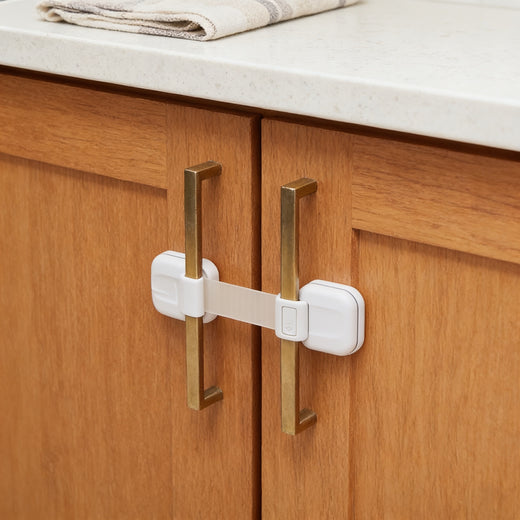
- Lock the low cabinets and drawers. Adhesive strap locks stick on with no drilling, which is handy if you rent. Our cabinet and drawer strap locks have a flexible strap up to 7.5 inches long and a sliding button that grown-ups can open with one hand.
- Move cleaners and dishwasher pods up high, even behind a locked door. A lock slows a child down, but a high shelf is harder to reach.
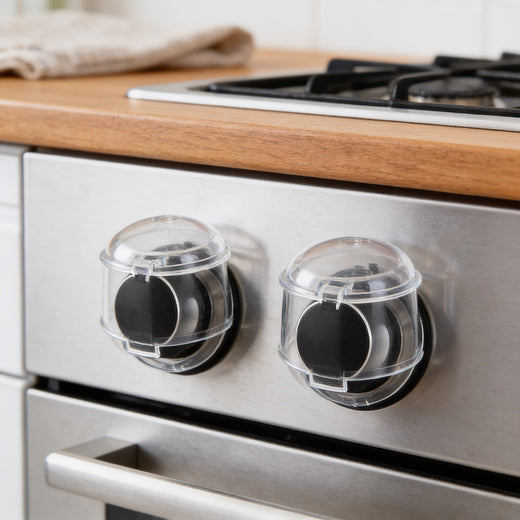
- Cover the stove knobs. Toddlers love turning dials. Flip-top stove knob covers fit over each knob, and the lid opens when you cook. The clear version lets you see the setting at a glance.
- Turn pot handles toward the back of the stove, and use the back burners when you can.
No cover or lock can stop every child, so keep little ones out of the cooking zone and never leave them alone near a hot stove.
Doors and stairs
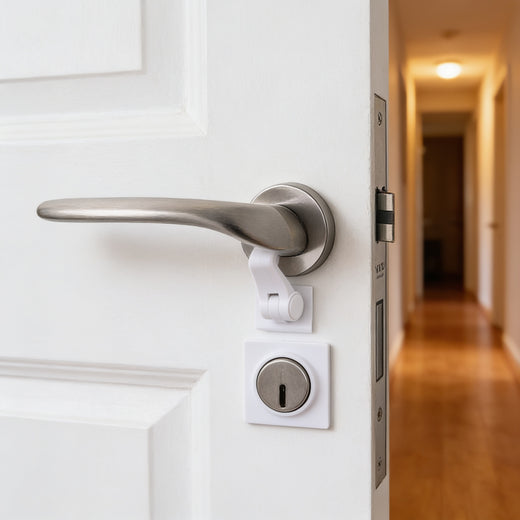
- Lever handles are easy for toddlers to push down. An adhesive door lever lock sits under the handle and blocks it until an adult presses the release. It works on left- or right-facing levers and comes off later with a hair dryer.
- Don't put a lever lock on an exit door or any door an adult may need to open in a hurry.
- Gate the top and bottom of the stairs. At the top of the stairs, use a gate that screws into the wall rather than a pressure-mounted one.
- Stop fingers getting pinched in closing doors with a door stop or a cushion over the top of the door.
The bathroom
- Keep medicines, vitamins, razors and cosmetics up high and locked. Strap locks work on bathroom vanities too.
- Keep the toilet lid down, and the bathroom door closed when it's not in use.
- Set your water heater to 120°F (49°C) or lower to help prevent scalds.
- Never leave a baby or toddler alone in or near water, even for a moment.
The living room and nursery
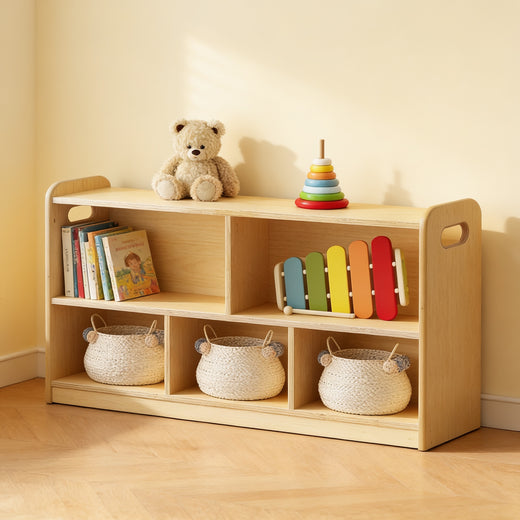
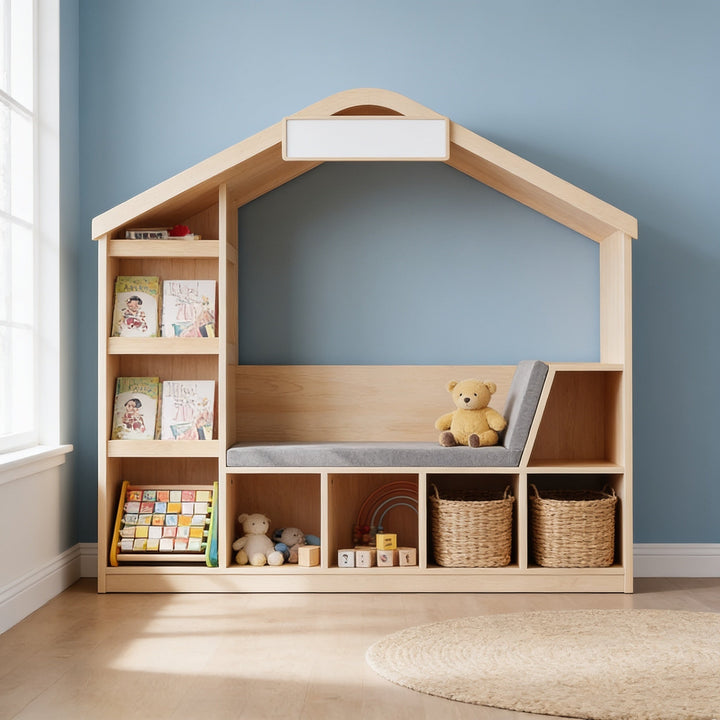
- Anchor furniture to the wall. Dressers, bookshelves and TV units can tip when a child climbs or pulls on them. If a shelf comes with anti-tip hardware, like our Juniper toy shelf and Elm bookshelf do, install it before the shelf is loaded.
- Cover unused outlets and tidy cords behind furniture.
- Tie up or cut blind cords and keep them well out of reach. Cordless blinds are safest.
- Keep the crib bare. A firm, flat mattress and a fitted sheet, with no pillows, bumpers or soft toys, and nothing hanging within reach.
- Check the floor for small things like coins, batteries and magnets. Button batteries in particular need to be kept well away from children.
Habits matter more than gadgets
Locks and covers add a layer of protection, but they're not a substitute for watching your child. Adhesive locks also need checking now and then, so press them to make sure they're still firm and replace any that loosen. Save the Poison Help line (1-800-222-1222 in the US) in your phone and put it on the fridge for babysitters.
Questions parents ask
When should I start babyproofing?
Before your baby starts moving on their own, usually around four to six months. Then look again when they crawl, pull to stand and walk.
Do adhesive locks really hold?
They hold well on clean, dry, smooth surfaces. Wipe the spot first, press firmly and check them regularly.
Which room should I babyproof first?
The kitchen and bathroom, since that's where the cleaners, medicines, heat and water are.
Still getting ready for baby? Start with our baby registry checklist.
Find locks and covers in our Babyproofing collection.