The first flight with a baby feels like a big deal. In practice, babies are often easier to fly with than toddlers, who want to run up and down the aisle. A little planning before you leave home takes care of most of the stress.
Booking the flight
- Lap seat or own seat? Many airlines let children under 2 fly on a parent's lap. The FAA recommends a seat of their own with an approved car seat or restraint, since it's the safest way to fly. Check your car seat's label to see if it's approved for aircraft.
- Pick flight times around sleep if you can. A flight during a usual nap can be much calmer.
- Choose a seat that works for you. Some parents like the aisle for easy walks, others a window for feeding in a quieter corner. Ask the airline about bassinet seats on longer flights.
- Check your airline's rules on strollers, car seats and baby bags before you go.
What to pack in your carry-on
- Twice as many diapers as you think you'll need, plus wipes
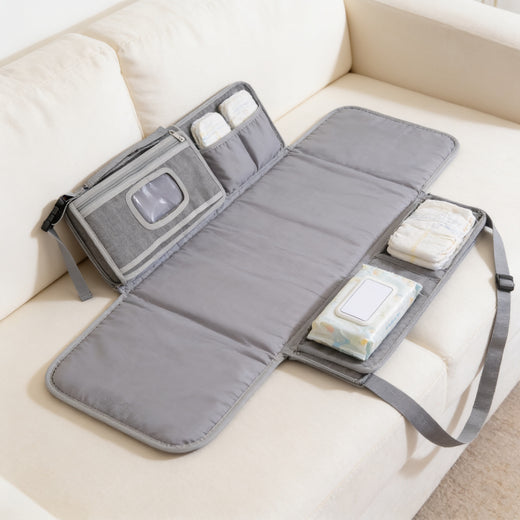
- A portable changing pad. Airplane changing tables are tiny, and the Robin changing pad folds to 11.8 by 7.9 inches with a wipes pocket
- Two spare outfits for baby and a spare top for you
- Feeding supplies, including extra in case of delays
- A light blanket, a few small toys and a pacifier if your baby uses one
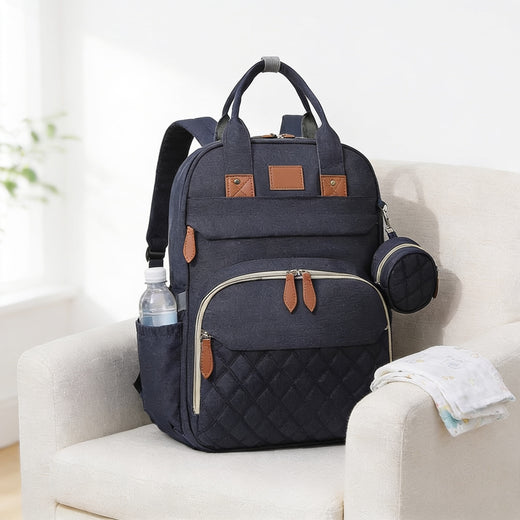
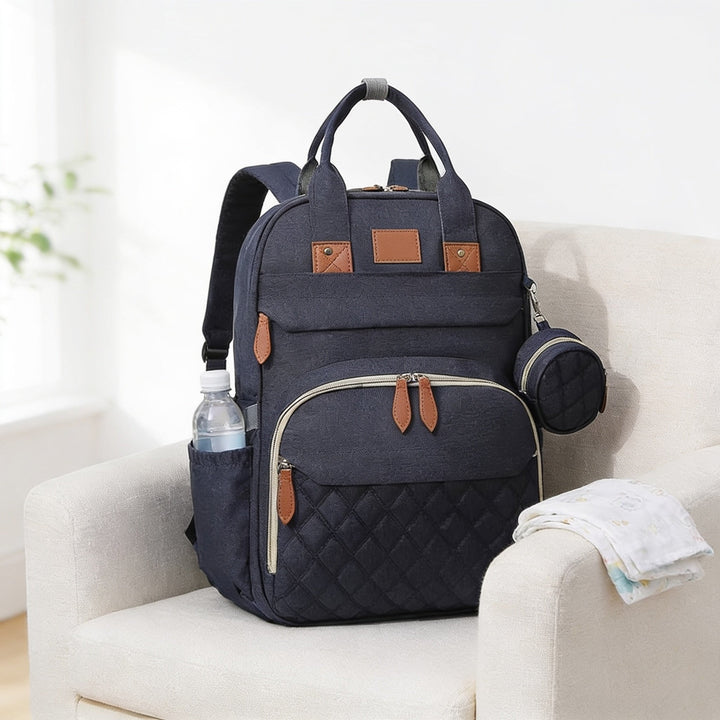
A backpack keeps your hands free for the baby and boarding passes. The Swift diaper backpack has insulated bottle pockets and a front phone pocket. For more, see our travel packing list.
Getting through security
In the US, formula, breast milk and baby food are allowed through security in reasonable amounts, even over the usual liquid limit. Tell the officer at the start and keep them together so they're easy to screen. Leave extra time. Everything takes longer with a baby.
The stroller
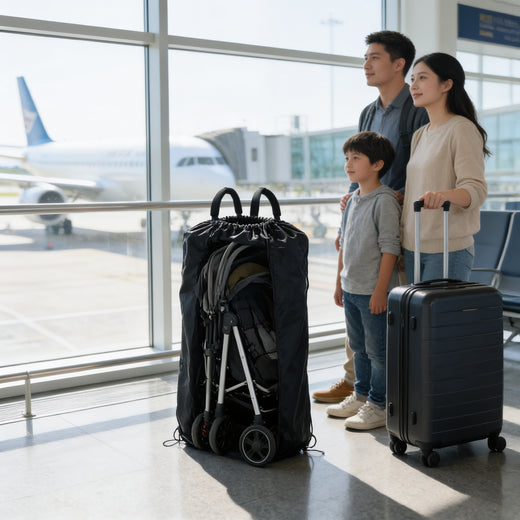
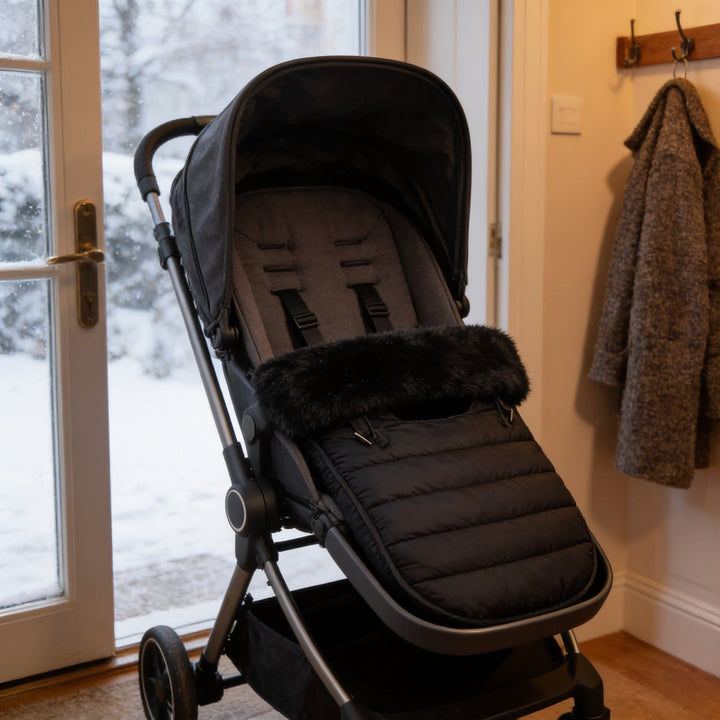
Most airlines let you gate-check a stroller for free, so you can use it right up to the plane. A bag keeps it clean on the way. The stroller travel bag is water-resistant Oxford cloth with a drawstring top, in three sizes to match how your stroller folds. It isn't padded, so it keeps the stroller clean but won't stop damage from rough handling.
Takeoff and landing
Changes in air pressure can bother little ears. Feeding or offering a pacifier during takeoff and landing gets your baby swallowing, which can help. Don't worry if they cry. Crying helps too, and the people around you have heard it before.
On board
- Change a diaper right before boarding.
- Walk the aisle when the seatbelt sign is off, if your baby gets fussy.
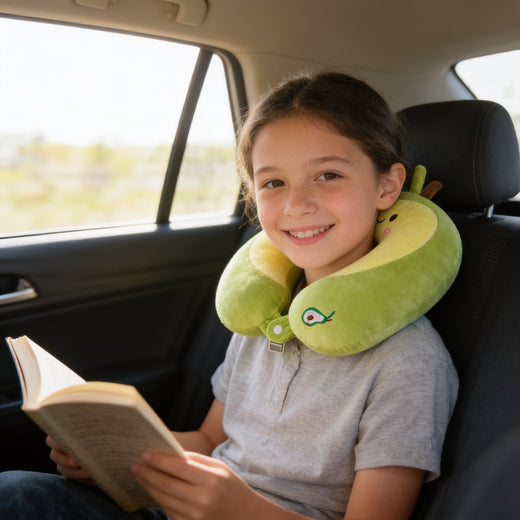
- Bring a travel pillow for yourself. A comfortable parent is a calmer parent. The Nap memory foam pillow is adult size, so it's for you, not the baby.
When you land
Take your time getting off. Waiting until the aisle clears makes it easier to gather your things. If you're renting a car, bring your own car seat or book one ahead.
Questions parents ask
How old does a baby have to be to fly?
Airline rules vary, and some set a minimum age. Many pediatricians suggest waiting a few weeks after birth. Check with your airline and your pediatrician.
Does a baby need a passport?
Yes, for international travel. For domestic US flights, airlines may ask for proof of age for lap infants, so bring a copy of the birth certificate.
How do I help my baby's ears on a plane?
Feed or offer a pacifier during takeoff and landing to keep them swallowing.
Shop travel helpers in our On the Go collection.