Dressing a toddler for winter is a daily puzzle. Too little and they're miserable ten minutes into the walk. Too much and they're sweaty, cranky and wriggling out of the stroller. Add the fact that toddlers now have opinions about their clothes, and it's no wonder mornings take forever.
Here's a simple way to think about it: pick the right outer layer for what you're doing that day, then build a couple of easy layers underneath.
Step 1: Pick the outer layer for the day
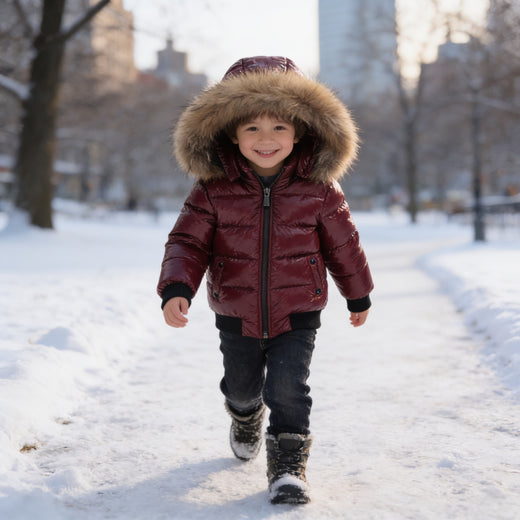
A puffer coat for everyday cold
For daycare drop-offs, park trips and errands, a warm puffer coat does most of the work. The Puffin hooded puffer jacket has white duck down fill (60% down) in a quilted shell, a zip-off hood and snap-flap pockets, in sizes from 18–24M up to 9–10Y.
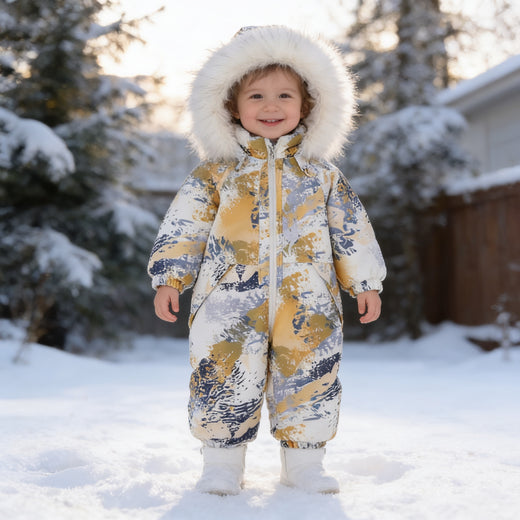
A one-piece snowsuit for snow play
When there's real snow and your toddler will be sitting in it, a one-piece keeps snow out of the gap between jacket and pants. The Snowdrop snowsuit runs from hood to ankle, with elastic wrist and ankle cuffs, in sizes 18M to 4T.
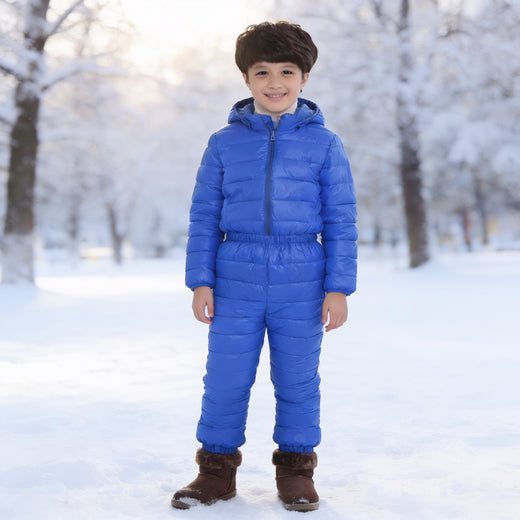
A two-piece set for kids who need bathroom breaks
Once potty training starts, one-pieces get complicated fast. A jacket and pants set lets the bottom half come off on its own. The Tundra snowsuit set has an elastic-waist pant and a separate hooded jacket, in sizes 2T to 11–12Y.
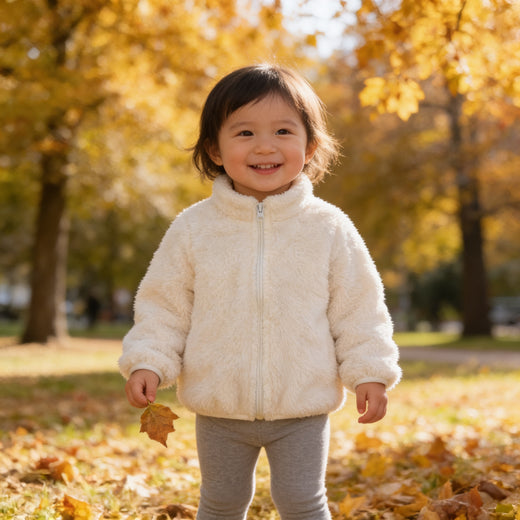
A plush jacket for cool, dry days
Not every winter day needs a full puffer. For crisp mornings and in-between weather, a soft zip-up layer is plenty. The Teddy plush jacket has a stand-up collar and comes in eight colors, sizes 9M to 6T. It also layers under a shell on colder days.
Step 2: Build the layers underneath
- Base layer: a long-sleeve top and leggings, snug but not tight.
- Middle layer: a sweater, fleece or plush jacket.
- Outer layer: the coat or snowsuit you picked above.
Layers are easier to adjust than one heavy outfit. Inside a warm store, the middle layer comes off in seconds.
Step 3: Don't forget the extremities
A hat that covers the ears, mittens and warm socks make a bigger difference than an extra sweater. A cuffed beanie that pulls down low, like the one in our Bow hat and scarf set, stays on better than a loose one. Scarves are nice for walks, but take them off before car seats, naps and playgrounds.
The car seat rule
This is the one rule worth remembering: puffy coats and snowsuits shouldn't be worn under a car seat harness. The padding squashes down in a crash and leaves the straps too loose. Take the coat off, buckle your child in, tighten the harness, then put the coat on backwards over their arms or lay a blanket on top. Pediatricians and car seat safety technicians give the same advice, and it takes about thirty extra seconds.
How to tell if they're dressed right
- Feel the back of the neck. Warm and dry is right; sweaty means too many layers.
- Cold hands on their own aren't a reliable sign. Check the neck or chest instead.
- If they're red-cheeked and cranky indoors, take a layer off straight away.
For the grown-up doing the carrying
If you wear your baby in a front carrier on winter walks, a coat with a zip-in front panel covers both of you. The Hearth babywearing jacket works as a maternity coat and then as a babywearing coat. Keep baby's face visible and uncovered, and check often that they aren't getting too warm.
Questions parents ask
Does my toddler need a snowsuit or a coat?
If they'll be sitting or playing in snow, a snowsuit keeps them dry. For everyday cold without snow play, a coat is simpler.
How should a toddler winter coat fit?
Measure a coat that fits now and leave a little room for a sweater underneath. Sleeves should reach the wrists with arms stretched out.
Is one more layer than me a good rule?
It's a helpful starting point for babies and young toddlers. Active toddlers who run around often need less than you'd think.
Carrying a baby this winter? Read our guide to babywearing in winter.
Browse coats, snowsuits and cozy layers in our Clothing collection. Heading out with the stroller? Read how to keep a baby warm in the stroller.