Sensory play sounds like something that needs special kits. For babies, it's much simpler: anything that lets them look, listen, touch and move. Everyday moments are full of it. Here are easy ideas for each stage of the first year. Always supervise, and choose items that are too big to fit in your baby's mouth.
0 to 3 months: faces, voices and contrast
- Your face. Newborns love faces most of all. Get close, talk and smile.
- High-contrast pictures in black and white, held about 8 to 12 inches away.
- Gentle sounds. Singing, humming and a soft rattle.
- Tummy time on your chest or a mat, while awake and supervised.
3 to 6 months: reaching and textures
- A texture basket. A soft scarf, a crinkly cloth, a wooden spoon and a silicone toy to explore with hands (and mouth).
- A baby-safe mirror during tummy time.
- Bubbles blown above them to watch and reach for. Keep the liquid out of reach.
6 to 9 months: sitting and splashing
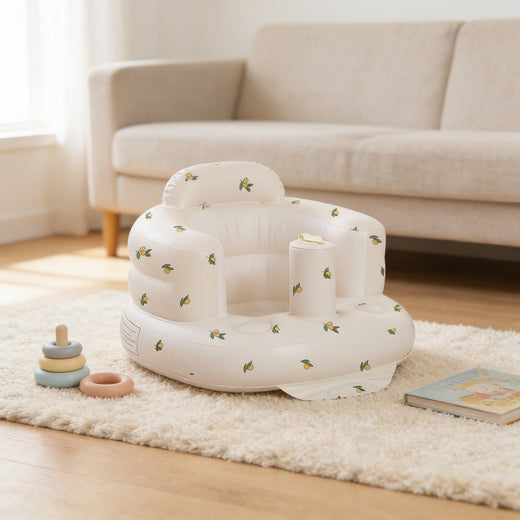
- Supported sitting play. Once your baby has steady head control, a floor seat can hold them upright for short, supervised play. The Mallow floor seat is for the floor only, never on raised surfaces or in water, and needs you within arm's reach. Mix it with lots of free floor time.
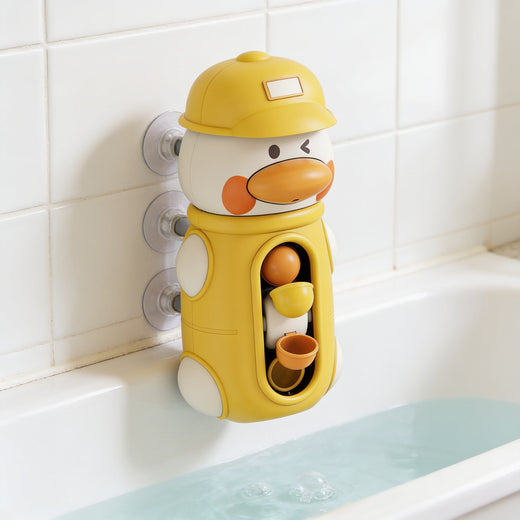
- Water play in the bath. Cups to fill and pour, and a toy that spins when water hits it. The Ripple bath toys include water wheels and spinners. Keep your baby within arm's reach and check toys for loose parts.
- Sound play. Tap a wooden spoon on a pot, then let them try.
9 to 12 months: cause and effect
- Posting games. Dropping large balls or blocks into a box.
- Peekaboo with a cloth or behind a chair.
- Music and movement. Dancing together, clapping and bouncing to a song.
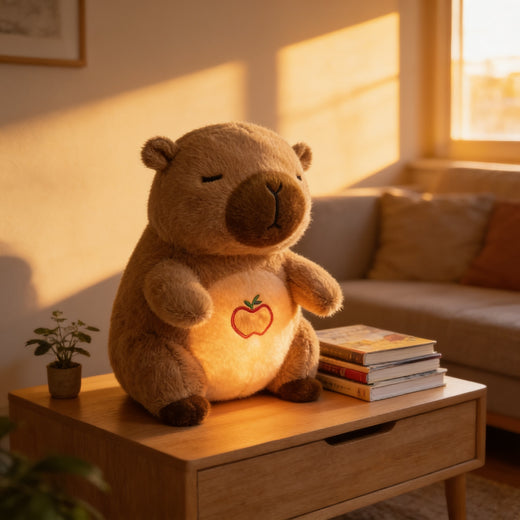
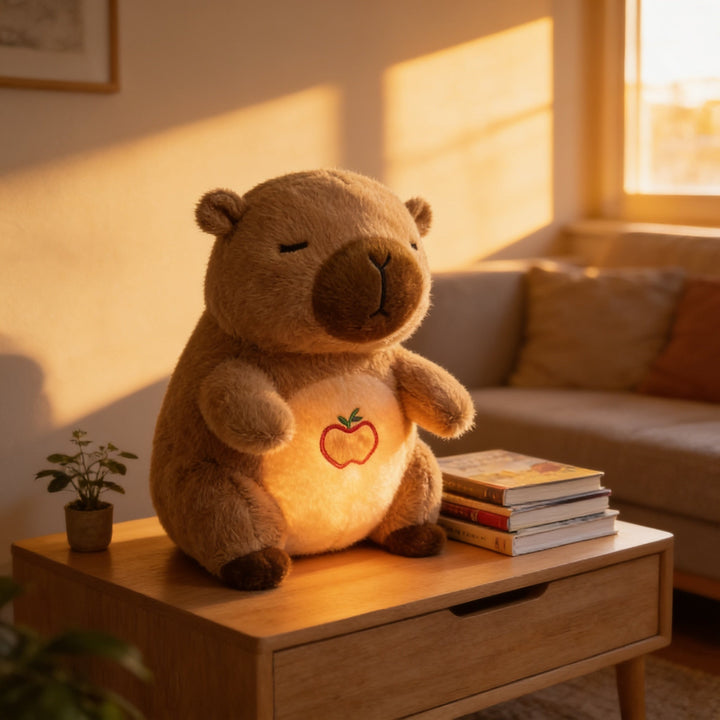
- Light and calm. A soft, glowing toy at story time can be soothing. The Capy breathing plush has a belly that rises and falls, a gentle glow and music. It's for awake cuddles, and stays out of the sleep space for babies under 12 months.
Everyday sensory moments
- Naming things on a walk: leaves, dogs, buses
- Letting them feel grass, sand or a cool window
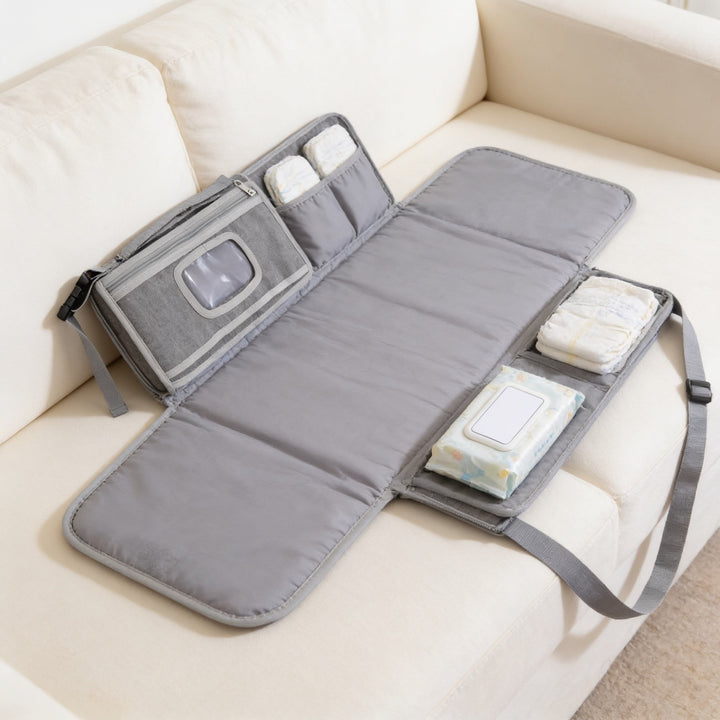
- Talking through bath time and diaper changes
Keep it safe
- Supervise all play.
- Skip small items, beads, button batteries and magnets.
- Stop when your baby turns away or fusses. It's a sign they've had enough.
Questions parents ask
When can I start sensory play with my baby?
From birth. For newborns, it's simply faces, voices and gentle touch.
How long should sensory play last?
A few minutes at a time. Follow your baby's cues.
Do I need special sensory toys?
No. Everyday objects, your voice and bath time offer plenty.
Getting ready for mealtimes? Read when babies can start solid food.
For more on this age, see when babies sit up and when to start reading to your baby.