Starting solids is one of the most exciting (and messiest) milestones of the first year. Many parents wonder when to start, what to offer and how much their baby should eat. Here's a simple guide. Always check with your pediatrician for advice about your own baby.
When to start
The American Academy of Pediatrics recommends starting solid foods at around 6 months of age. Before then, breast milk or formula gives babies everything they need. Every baby is different, so readiness signs matter as much as age.
Signs your baby is ready
- They can sit up with little or no support.
- They have good head and neck control.
- They show interest in food, watching you eat or reaching for your plate.
- They no longer push food straight back out with their tongue.
What to offer first
- Iron-rich foods are important around 6 months, such as iron-fortified cereals, pureed or finely shredded meat, beans and lentils.
- Vegetables and fruits, mashed or pureed, or soft pieces your baby can pick up.
- One new food at a time for a few days, so you can spot any reactions.
- Common allergens. Current guidance supports introducing foods like peanut (in a safe, baby-appropriate form) and egg early for many babies. Talk to your pediatrician first, especially if your baby has eczema or known allergies.
Breast milk or formula is still their main source of nutrition for the first year. Early meals are about exploring tastes and textures.
Reduce the risk of choking
- Always seat your baby upright, and stay with them while they eat.
- Offer soft foods that squish easily between your fingers.
- Avoid whole nuts, whole grapes, popcorn, raw hard vegetables, hard candy and chunks of meat or cheese.
- Cut round foods like grapes and cherry tomatoes lengthwise into quarters.
- Don't give honey before 12 months.
Setting up for mealtimes
- A high chair with a harness and a footrest helps babies sit steadily.
- A bib and a mat under the chair make clean-up easier.
- Soft, shallow spoons suit little mouths.
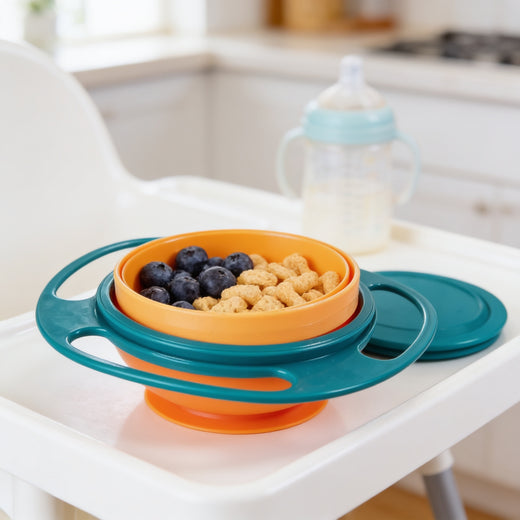
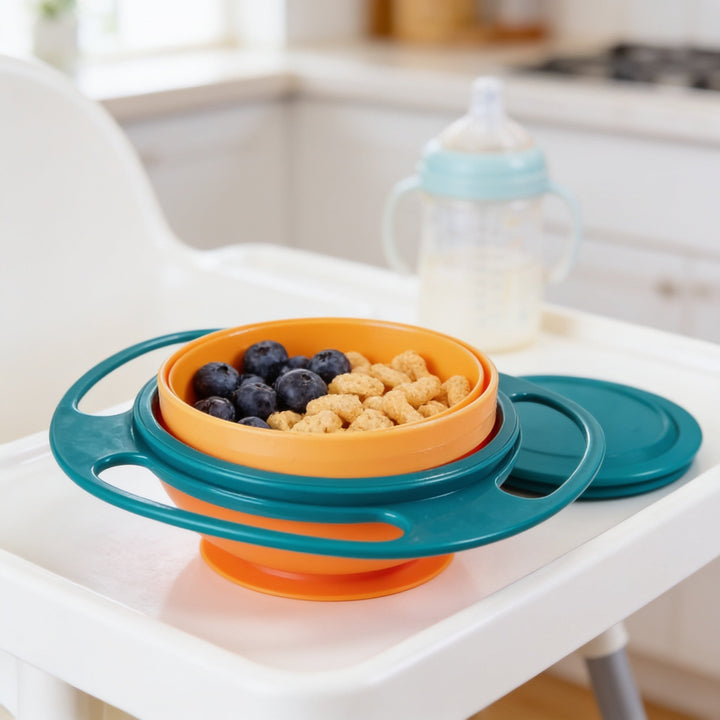
Later, when your baby is ready for finger foods like puffs and dry cereal, a rotating snack bowl helps with tips. The Twirl 360° bowl has an inner bowl that turns inside a ring with handles, and a lid. It's for dry snacks only, and no bowl stops every spill.
Keep it relaxed
Some babies dive in, others take weeks to be interested. Offer a variety, follow their hunger cues and let them explore. Mess is part of learning.
Questions parents ask
Can I start solids at 4 months?
The AAP recommends waiting until around 6 months. Talk to your pediatrician if you're thinking of starting earlier.
How much should my baby eat when starting solids?
Just a few spoonfuls at first. Follow their cues and let them decide how much.
What are the best first foods?
Iron-rich foods, plus soft vegetables and fruits, one new food at a time.
For the toddler years, see toddler snack time with fewer spills.