Good toy storage does two jobs: it keeps the room calm, and it lets kids find and put away their own toys. The best choice depends on your child's age, the kinds of toys you have and how much space you've got. Here's how the main types compare.
Open, low shelves
Best for: toddlers, Montessori-style rooms and toy rotation.
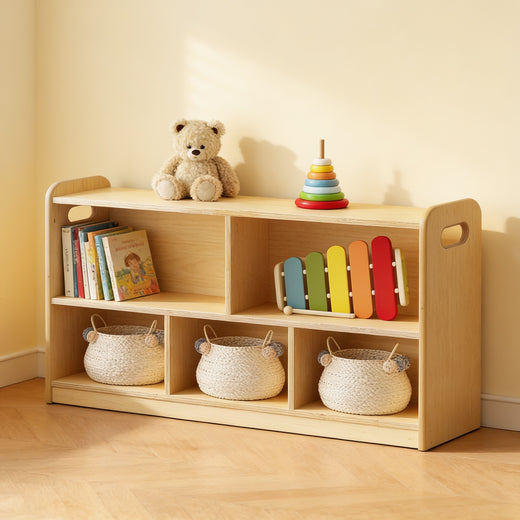
Everything is visible at their height, so children can choose a toy and put it back. The Juniper toy shelf is 23.6 inches tall with no doors, with two upper compartments (21.3 by 9.8 inches) and three lower ones (13.8 by 8.7 inches). It's poplar plywood, 0.7 inches thick, and comes with metal anti-tip anchors.
Watch out for: too many toys out at once. Keep a few on each shelf and rotate.
Bins and drawers
Best for: small toys like blocks, cars and figures.
One category per bin makes tidying simple. The Maple toy storage has nine removable bins (small ones 7.5 by 11.6 inches, large ones 15.3 by 11.6 inches), two fold-flat fabric drawers and a front-facing book shelf. Anchor it with the included hardware.
Watch out for: deep bins where toys disappear. Shallow bins keep things visible.
Rolling carts
Best for: moving toys between rooms, and making tidy-up a game.
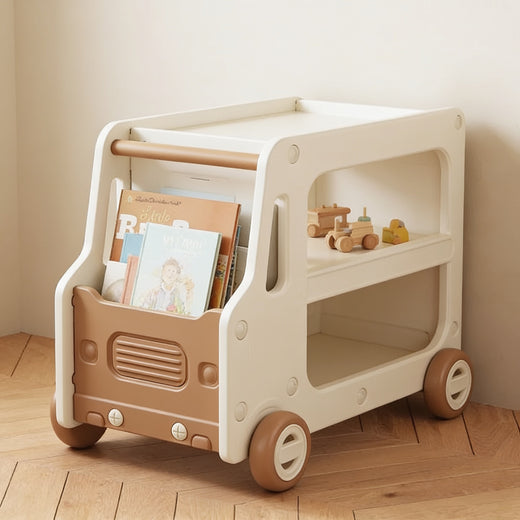
The Cedar truck cart is made of wipe-clean HDPE plastic, with a front book pocket and two open shelves. You can add storage bins (11.8 by 7.5 by 5.1 inches each) or 120 building blocks with a block-building top. It needs assembly, and it's storage, not a ride-on.
Toy chests
Best for: big, soft things like plush, balls and blankets.
Chests hold a lot but can become a jumble. A rolling chest that pulls out from a shelf, like the one in the Maple unit, is easier for kids than a lidded box. If you use a chest with a lid, choose one with a lid support that holds it open and no latch that can trap a child.
Bookshelves with cubbies
Best for: rooms where books and toys live together.
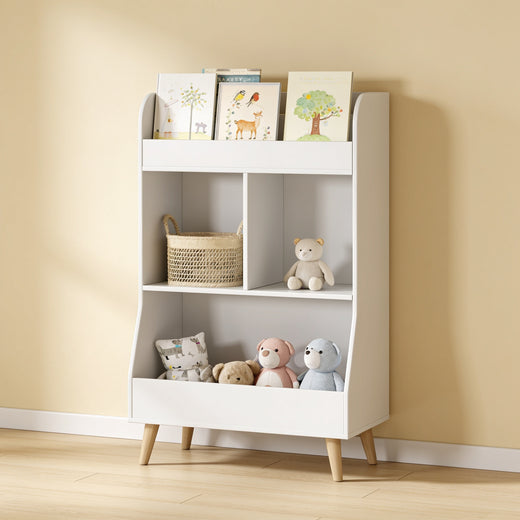
The Elm bookshelf combines a front-facing book rack, two cubbies and a deep toy bin in a 24.4-inch-wide footprint. See how to choose a kids bookshelf for more options.
What to measure before you buy
- The wall space, including skirting boards and outlets
- Your biggest toys, against bin and shelf openings
- Your child's reach: low shelves they can use themselves
Safety tips
- Anchor shelves and storage units to the wall.
- Keep heavy items low.
- Don't let children climb or stand on storage.
- Store toys with small parts up high if you have a child under 3.
Questions parents ask
What's the best toy storage for toddlers?
Low, open shelves with a few toys, plus bins for small pieces.
Are toy boxes a good idea?
They work for big soft toys. For everything else, shelves and bins make toys easier to find and put away.
How do I choose toy storage for a small room?
Go vertical and narrow, and pick one piece that does two jobs, like a bookshelf with toy cubbies.
More ideas in how to declutter toys.