If your living room floor has a permanent layer of blocks, board books and one very important plastic giraffe, you are not doing anything wrong. Toddlers pull out everything they can reach. The fix usually isn't more storage. It's putting out less, in a way they can actually see.
That's the whole idea behind a Montessori toy shelf: a low, open shelf with a handful of toys, each with its own spot. Your child can see every choice, pick one, and put it back when they're done. Below is how we'd set one up at home, including the part most guides skip, which is how to rotate toys without it turning into a weekly project.
The quick answer
- Use a low, open shelf your child can reach while standing. Around 24 inches tall suits most toddlers.
- Put out 6 to 10 toys, not 30.
- Give each toy its own space, with a tray or small basket for anything with lots of pieces.
- Swap a few toys every week or two, starting with the ones nobody touches.
- Anchor the shelf to the wall before anything goes on it.
Why a low, open shelf beats a toy box
A toy box is great for hiding things and terrible for finding them. The toy your child wants is always at the bottom, so everything comes out to get it. On an open shelf, every toy is visible at once. Kids choose faster, play longer with what they pick and, with a bit of practice, put things back because they can see exactly where "back" is.
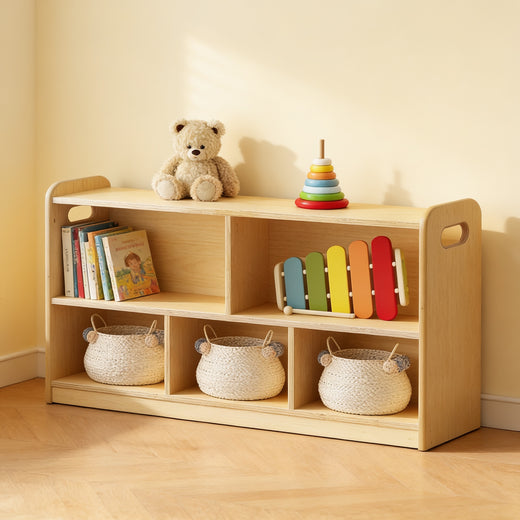
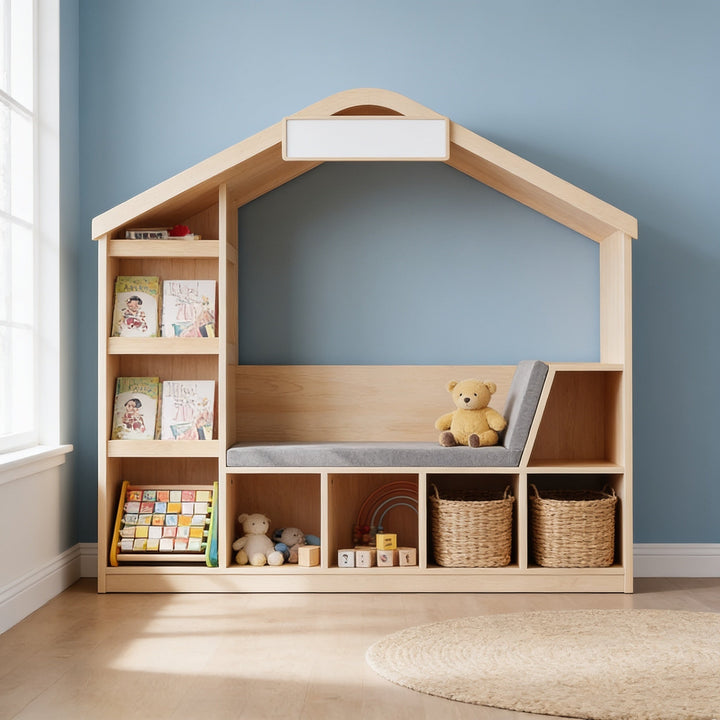
Height matters more than people expect. When the top of the shelf sits around your toddler's chest, they can reach the top row without climbing. Our Juniper 2-Tier Montessori Toy Shelf is 23.6 inches tall and 44.5 inches wide, with two wide spaces on top and three below, all at toddler height. There are no doors, so nothing to pinch fingers or hide toys behind.
How many toys should go on a Montessori shelf?
Fewer than you think. For a toddler, somewhere between 6 and 10 is plenty. On a five-compartment shelf that might look like:
- One puzzle or shape sorter
- A stacking toy
- A small basket of blocks
- One or two vehicles or animal figures
- Something musical (yes, the xylophone that drives you slightly mad)
- A few books, face out, somewhere close by
Empty space isn't wasted space here. It's what makes each toy look like a choice instead of part of the clutter.
A toy rotation routine you'll actually keep up with
Toy rotation sounds lovely until you picture yourself labeling bins every Sunday night. Here's the lighter version we'd recommend:
- Split everything into "out" and "resting." Out goes on the shelf. Resting goes in a closet, a bin or under the bed.
- Watch for a week. Notice what never gets played with.
- Swap only the ignored toys. Two or three at a time. Leave the favorites where they are.
- Repeat when you see boredom creeping in, not on a strict schedule.
That's it. A toy that comes back after a few weeks away often feels brand new, which is the entire point.
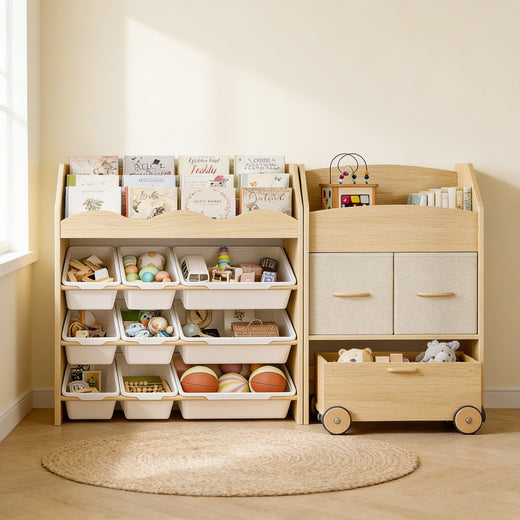
If you have more toys than closet space, a bigger unit can do both jobs. The Maple 9-Bin Toy Storage & Book Display has nine removable bins, two fabric drawers for the "resting" toys, a rolling chest for bulky ones and a front-facing shelf for books, all in one 55.3-inch-wide pine frame.
Don't forget the books
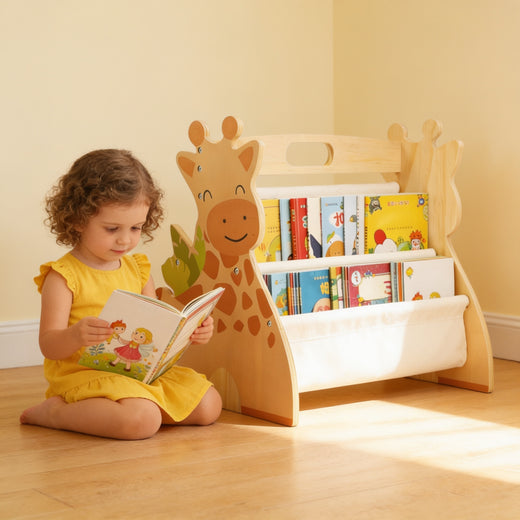
Books belong in the same system. Little kids choose books by their covers, so a spine-out bookcase doesn't help a two-year-old much. Put four to six books face out and rotate them the same way you rotate toys.
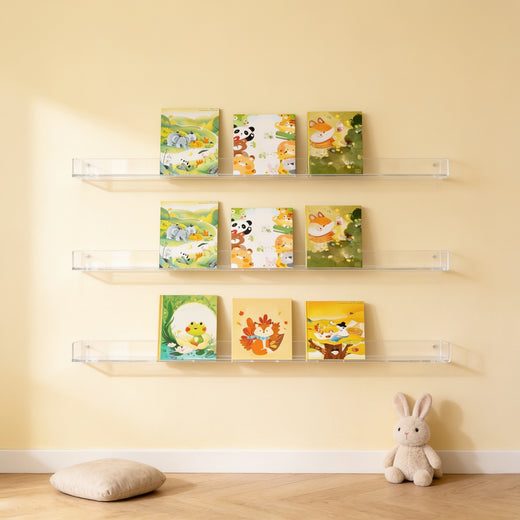
A small floor rack like the Alder 2-Tier Montessori Book Rack stands under 14 inches tall, so a child sitting on the floor can reach both fabric tiers. Short on floor space? Clear wall-mounted picture book ledges do the same job from the wall.
Safety first: anchor it
Low shelves can still tip if a toddler pulls on them or tries to climb. Anchor any shelf to the wall before you load it, even a short one. Juniper and Maple both come with anti-tip hardware in the box. It's five minutes with a drill and absolutely worth it.
Questions parents ask
What age is a Montessori toy shelf for?
Many families start once their baby is crawling or pulling up, and keep using the same shelf well into the preschool years. You just change what's on it.
What if my toddler dumps everything anyway?
They will, at first. Put out fewer toys, show them where one thing goes back, and make tidying part of the routine rather than a punishment. It takes weeks, not days.
Do I need a "real" Montessori shelf?
No. Any low, sturdy, open shelf that's anchored to the wall works. What matters is the height, the open layout and keeping the number of toys small.
Shopping for a little one? See our first birthday gift ideas.
No playroom? Try these living room toy storage ideas.
Setting up a play space from scratch? Browse our Nursery collection, where every piece is chosen to be low, calm and easy for little hands to use.