A night light can make night feeds easier and help a toddler who's started to worry about the dark. But not all light is equal at bedtime. The color and brightness of a night light can make a difference to how easily everyone settles back to sleep.
The short answer: dim and warm
For sleep, the best night light is dim and warm-toned, like the soft amber of a candle or a sunset. Bright white and blue light are more likely to signal "daytime" to the body. Research on light and sleep has found that blue-rich light suppresses melatonin, the hormone that helps us feel sleepy, more than warm, dim light does.
In practice, that means:
- Choose warm tones like amber, orange or soft red over cool white or blue.
- Keep it dim. Just enough to see by, not enough to read a book.
- Avoid bright overhead lights for night wake-ups.
Brightness matters as much as color
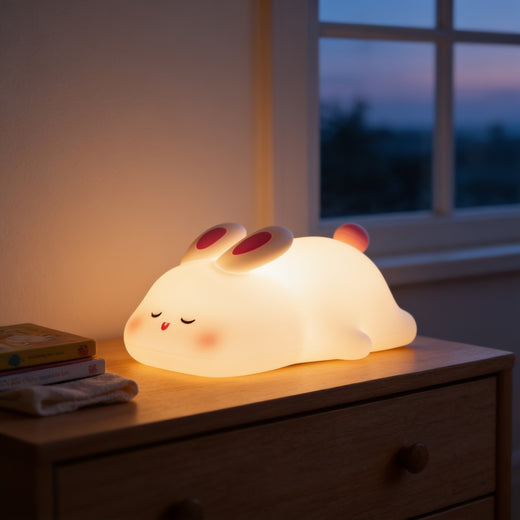
Even a warm light can be too bright. A light with brightness settings lets you turn it down for the night and up for a diaper change. The Glow night light has three brightness levels (30%, 60% and 100%), taps on and off, and is cordless, running about six hours per charge. Use the lowest setting overnight.
Where to put a night light
- Low and out of sight lines. On a dresser or nightstand, not facing the crib or bed.
- Out of the crib. Keep lights, cords and chargers away from the sleep space and little hands.
- Away from bedding while charging.
Do babies need a night light?
Babies don't need one to sleep. Darkness is actually helpful. A night light is mostly for parents, so you can feed and change without switching on a bright lamp. Turn it on when you need it, and off when you're done.
What about toddlers?
Many toddlers start to notice the dark somewhere between two and three years old. A dim, warm light can make the room feel safe. Let them help choose it and turn it on as part of the bedtime routine. See our toddler bedtime routine for the full routine.
Star projectors and glowing toys
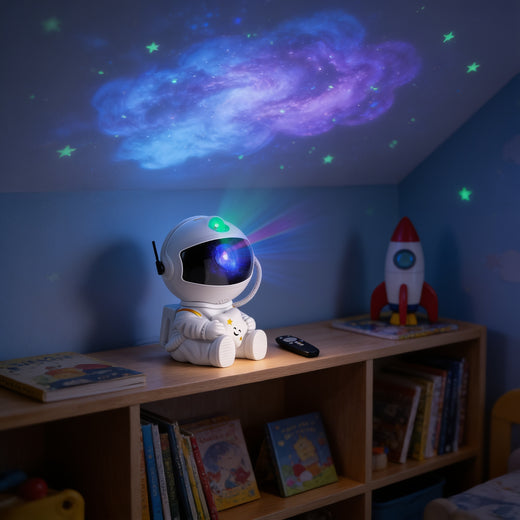
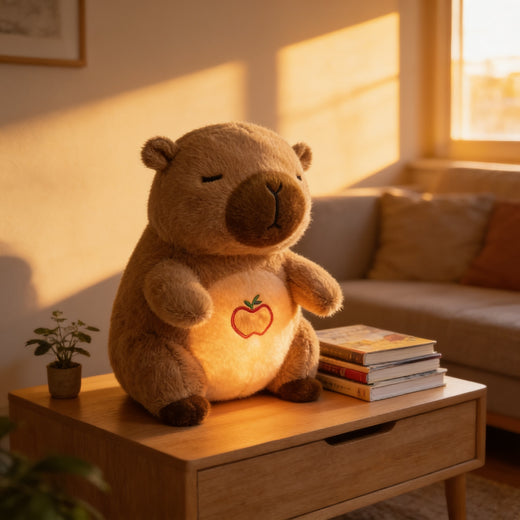
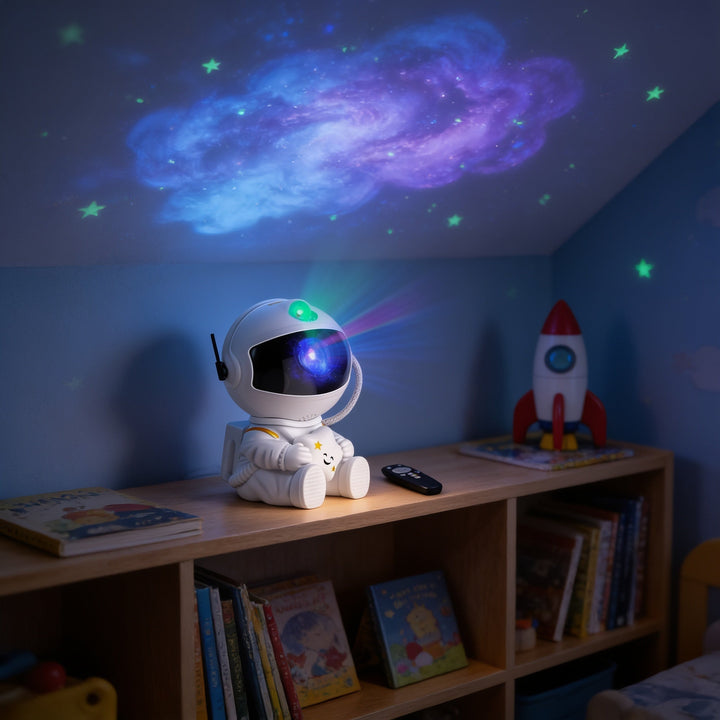
Projectors and glowing plush can be a fun part of story time. The Orbit star projector puts stars and nebula clouds on the ceiling, with brightness and speed on a remote an adult keeps. The Capy breathing plush has a soft glow and music for cuddles. We'd use both for winding down, then switch them off or dim them right down for sleep. Nobody should look directly into a projector light, and plush toys stay out of the sleep space for babies under 12 months.
Questions parents ask
Is red light better for sleep?
Warm tones like red and amber are generally less stimulating than blue or white light, especially when dim.
Should a toddler sleep with a night light on?
If it helps them feel safe, a dim, warm night light is fine. Keep it low and away from the bed.
What brightness should a night light be?
As dim as possible while still letting you see. Use the lowest setting overnight.
Is your little one scared at night? See gentle ways to help a toddler afraid of the dark.
See calm pieces for bedtime in our Nursery collection.