Sharing a room can be one of the sweetest parts of childhood, with late-night whispers, built-in company and a best friend across the room. It can also mean squabbles over space and stuff. A thoughtful setup makes a big difference. Here's how to make one room work for two.
Start with the layout
- Beds on opposite walls give each child their own side.
- Beds in an L-shape in a corner free up floor space for play.
- Bunk beds save the most space. Follow the manufacturer's guidance, and keep children under 6 off the top bunk.
If one child is a baby, their sleep space needs to follow current safe sleep guidance, with nothing else inside and nothing hung above it.
Split the storage
Most shared-room arguments are about stuff. Give each child their own clearly marked storage, and keep shared toys in a separate spot.
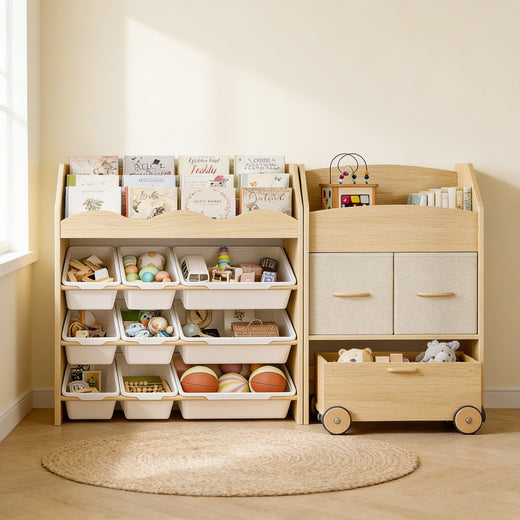
A long unit with lots of bins is easy to divide. The Maple toy storage and book display is 55.3 inches wide with nine removable bins, two fabric drawers and a rolling toy chest. Give each child their own row of bins and share the book shelf. It comes with anti-tip hardware and must be anchored to the wall.
Give each child a spot of their own
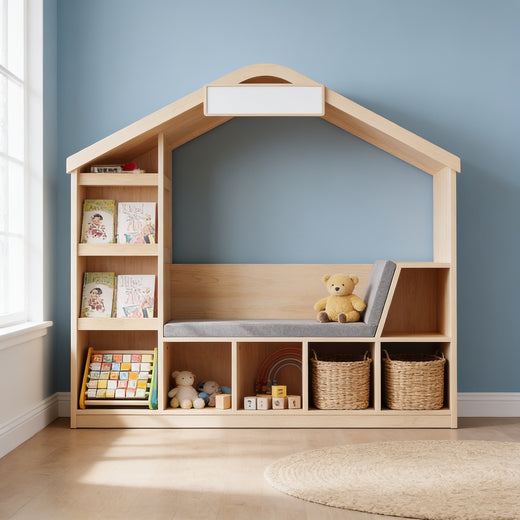
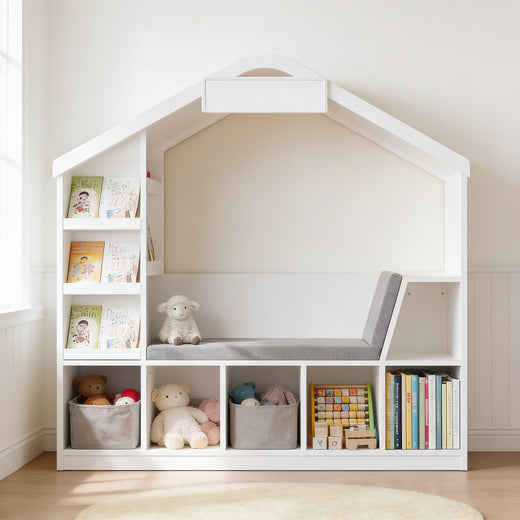
Even in a small room, a personal corner helps. A reading nook makes a great "just mine" space. The Birch and Hazel bookshelves each have a cushioned reading bench inside a little house frame, a 3-tier book display and five open cubbies, with a removable nameplate on top. They're 47.2 inches wide and must be anchored with the included anti-tip kit.
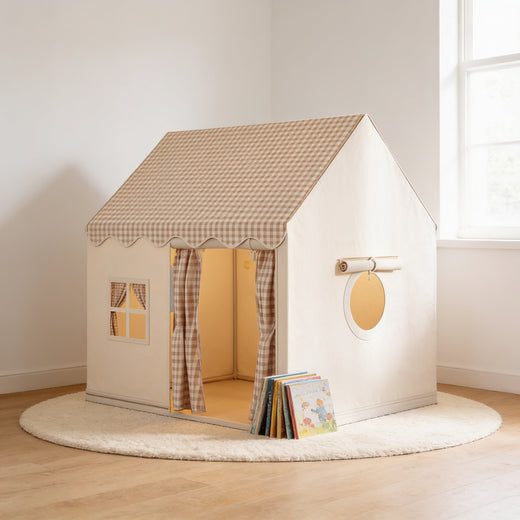
No room for furniture? A play tent that folds away, like the Hideout, can be a daytime hideout that packs down at night.
Handle different ages
- Keep small parts high. Older kids' toys with small pieces go on high shelves or in closed bins if a sibling is under 3.
- Stagger bedtimes if needed. Put the younger child down first, and let the older one read quietly in another room before joining.
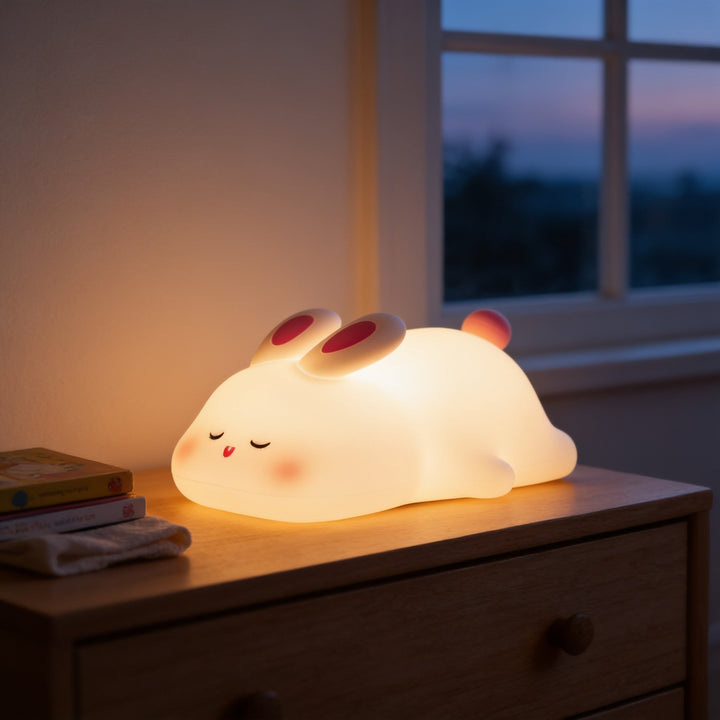
- Use a dim night light so an older child can find their way without waking the younger one. Keep it out of any crib.
Keep the decor calm
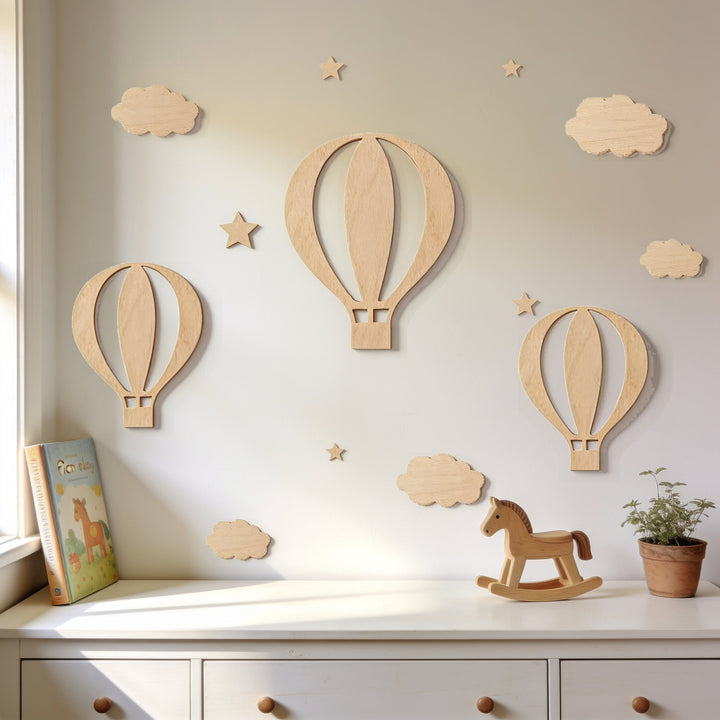
A soft, shared color palette with a personal touch for each child (their name, a favorite color on their bedding) looks pulled together without being busy. Flat wall decor like the Lofty hot air balloon set adds charm without clutter. Hang it away from beds and out of reach. See more nursery wall decor ideas.
Set a few shared-room rules
- Knock or ask before using each other's things.
- Quiet voices after lights out.
- Everyone helps with the evening tidy.
Questions parents ask
What age can siblings share a room?
Many families move siblings together once the youngest is sleeping well, often after the first year. Follow safe sleep guidance for babies under 1.
How do I stop one child waking the other?
White noise, a consistent routine and staggered bedtimes help. It usually settles within a few weeks.
How do I divide storage fairly?
Give each child the same number of bins or shelves, label them, and keep shared toys separate.
Browse storage and nursery pieces in our Nursery collection.