Bath time is one of the best parts of the day with a toddler, and one of the times to be most careful. Children can drown quickly and quietly, even in very shallow water. These ten habits make every bath safer, without taking the fun out of it.
1. Stay within arm's reach, every time
This is the rule that matters most. Stay close enough to touch your child for the whole bath. If the doorbell rings or you forget the towel, wrap your child up and take them with you. Older siblings aren't a substitute for an adult.
2. Get everything ready first
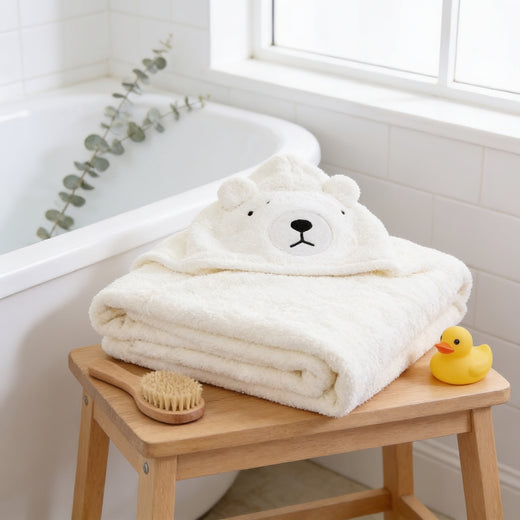
Set out the towel, clean clothes, wash and toys before the water goes in, so there's no reason to step away. A big hooded towel like the Puddle towel makes the lift-out quick and warm.
3. Keep the water shallow
Use only as much water as you need, enough for your child to sit comfortably, usually no higher than their waist when seated.
4. Check the temperature
Aim for warm, not hot, around 100°F (38°C). Test it with your wrist or elbow and swirl the water to break up hot spots. Setting your water heater to 120°F (49°C) or lower also helps prevent scalds.
5. Stop slips with a bath mat
Wet tubs are slippery, and toddlers love to stand up. A suction mat on the tub floor gives little feet more grip.
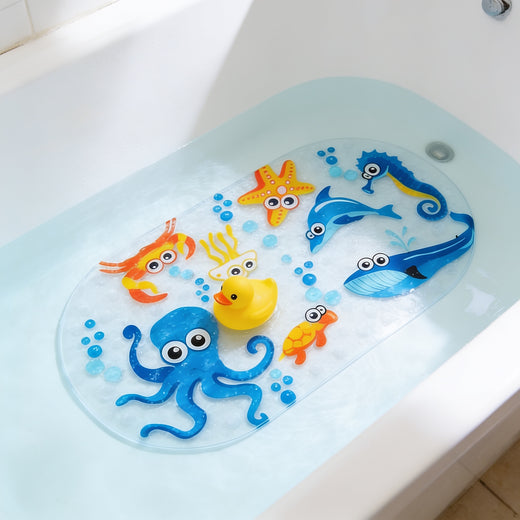
- The Lagoon bath mat is a 27 by 15 inch oval with suction cups underneath, and it's machine washable (cold and gentle).
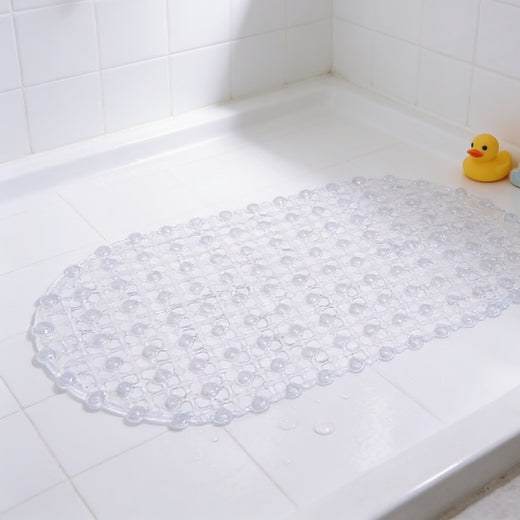
- The Brook shower mat is a 26.4 by 14.8 inch oval with an open grid that lets water drain through.
Both grip smooth tub floors only, not textured or anti-slip coated surfaces. Press the suction cups down before each bath, skip bath oils (they make mats slippery) and rinse mats often to clear soap buildup.
6. Choose toys that suit the bath
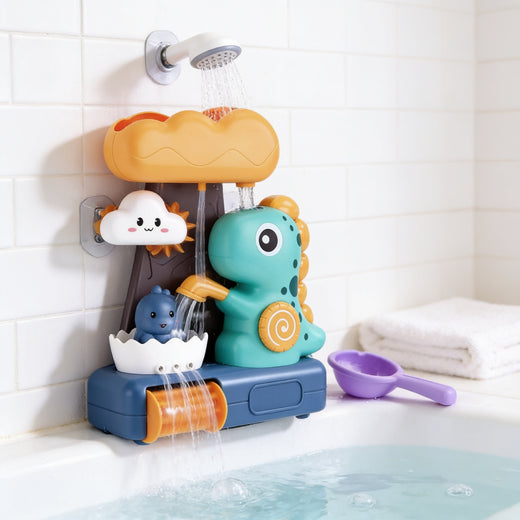
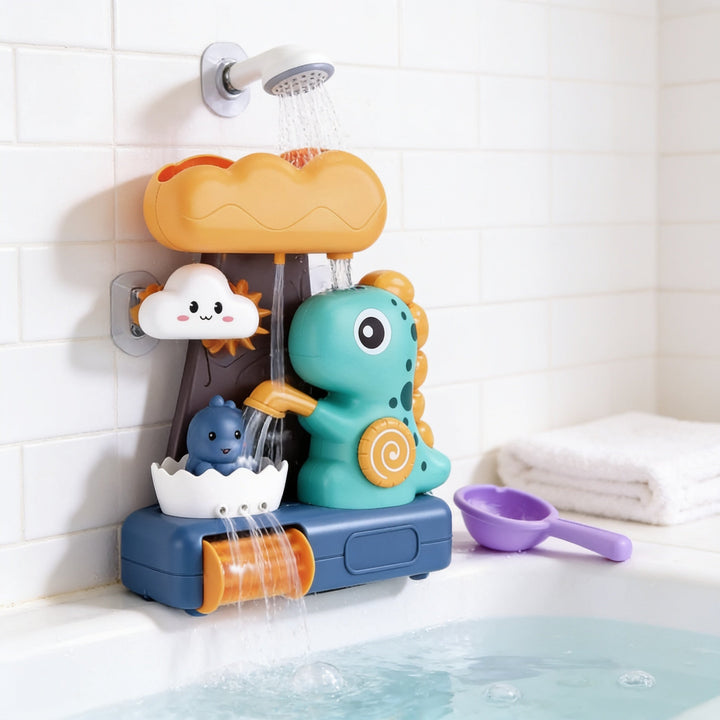
Pick toys made for water, and check them for loose or broken parts before each bath. Toys that stick to the wall keep little hands busy at a safe height. The Dino waterfall and the Duck and Flower water wheels run on poured water with no batteries. Remember that wall toys aren't handles, so they shouldn't be used for pulling up or hanging on.
7. Dry toys between baths
Water left inside bath toys can get grimy. Rinse, tip them to drain and let them air-dry out of the tub. Take wall toys down now and then so the backs dry too.
8. Know that bath seats aren't safety devices
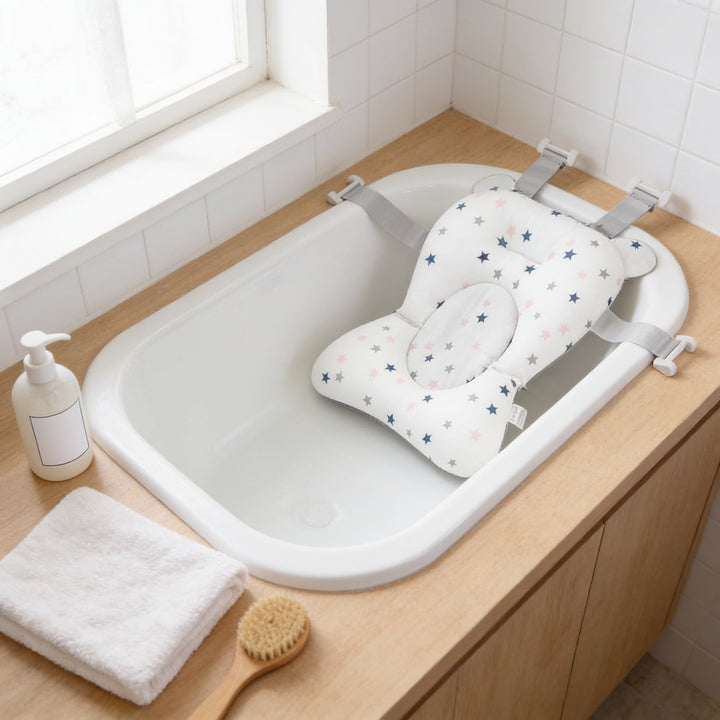
Bath seats and supports can make bathing easier, but they don't prevent drowning. Keep your hands close and your eyes on your child even when they're in one.
9. Drain the tub straight away
Empty the tub as soon as bath time ends, before you dress your child. Standing water is a risk for a curious toddler who wanders back.
10. Make the bathroom toddler-safe
- Keep medicines, razors and cleaners locked away or up high.
- Keep the toilet lid down and the bathroom door closed.
- Unplug hair dryers and other appliances and keep them away from water.
Our babyproofing checklist has more ideas for the whole house.
Questions parents ask
How deep should bath water be for a toddler?
Shallow, usually no higher than their waist when sitting. Use only what you need.
At what age can a child bathe alone?
There's no set age. Young children need an adult within arm's reach at every bath, and many families keep supervising well into the school years, until a child is confident in water and can get in and out safely.
Are bath mats necessary?
They help. A mat or non-slip surface makes slips less likely when toddlers stand or move around.
Looking for fun ideas too? See our best bath toys for toddlers, or shop Bath Time.