Most families don't have a book problem. They have a book storage problem. Books get packed spine-out on a tall shelf, little ones can't tell them apart, and the same three favorites get read while the rest gather dust. A few small changes make a big difference to how often books come off the shelf.
1. Show the covers
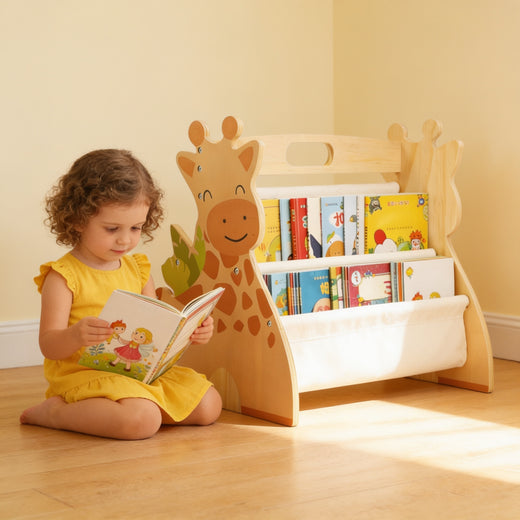
Young children choose books by the picture on the front, not the title on the spine. Front-facing storage lets them see what's there and pick for themselves. That's the idea behind a sling rack like the Alder book rack, which has two fabric sling tiers on each side and stands under 14 inches tall, at toddler height. Load both sides evenly and set it on a flat floor.
2. Keep a small rotation out
Ten to fifteen books within reach is plenty for a toddler. Store the rest in a box or a high shelf and swap a few every week or two. Books that have been away for a while feel new again. It's the same idea as toy rotation, which we cover in our Montessori shelf guide.
3. Match storage to the space
No floor space? Go up the wall
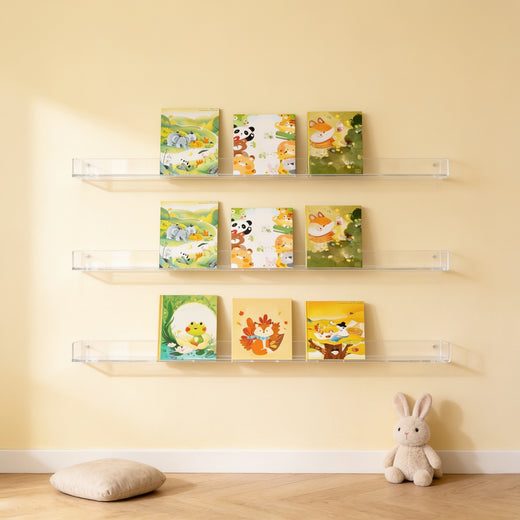
Clear Aspen wall ledges are 17.7 inches long and just 1.9 inches deep, so books sit face out with nothing on the floor. Mount them away from the crib and changing table.
A tabletop or low shelf
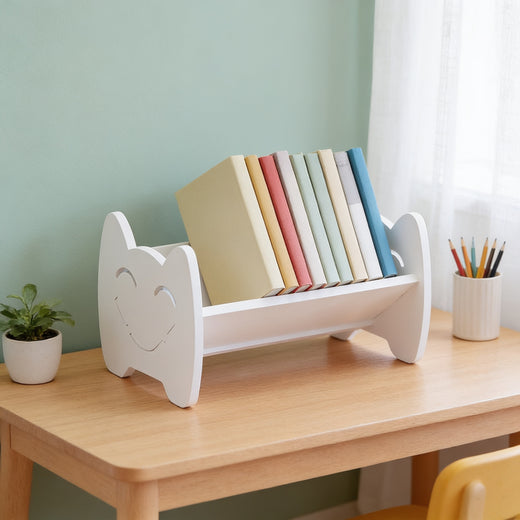
The Sunny book rack has a V-shaped cradle that tilts books back rather than forward, with a small 12.6-inch footprint. It's a nice way to feature this week's picks on a dresser or low shelf.
Books and toys together
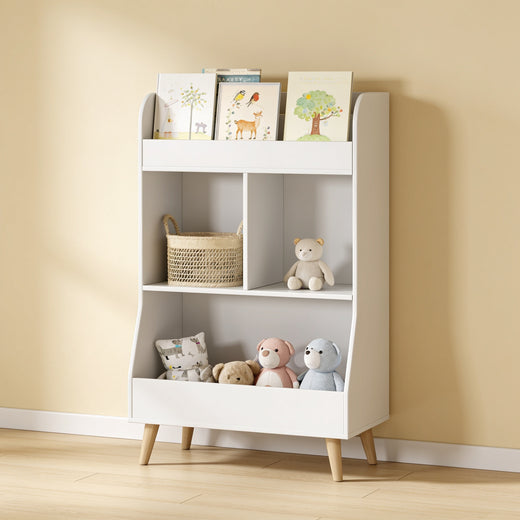
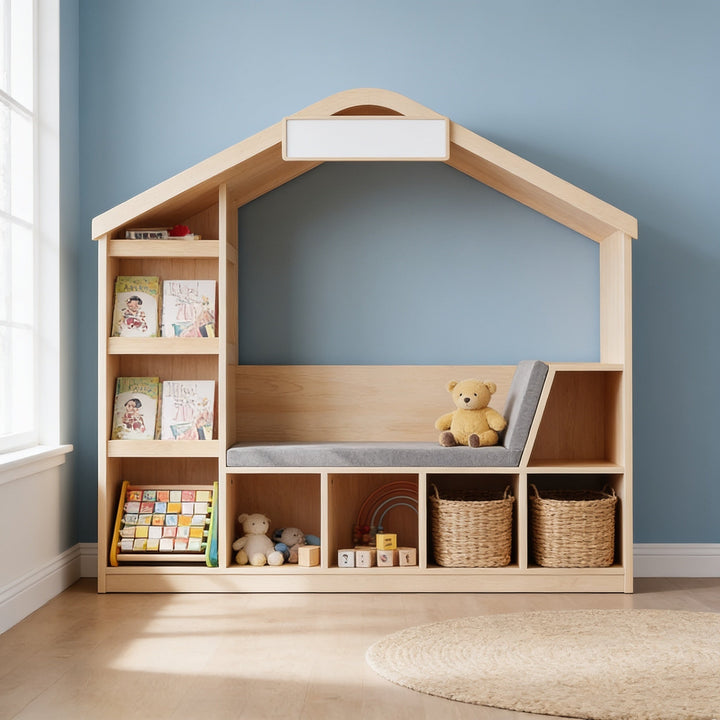
If books and toys share a room, one piece can hold both. The Elm bookshelf has a 2-tier face-out rack on top, cubbies in the middle and a toy bin below. For a big collection, the Maple toy storage and book display is 55.3 inches wide, with a front-facing wave shelf for books, nine bins, two fabric drawers and a rolling toy chest. Anchor both to the wall with the included anti-tip hardware.
4. Sort in a way your child understands
Adults sort by author. Kids sort by "the truck ones" and "the bedtime ones". Try grouping by topic or by time of day, like a basket of bedtime books by the bed and busy, flap-lift books in the play area.
5. Store by age
- Babies: board and cloth books in a basket on the floor, so they can pull them out during floor play.
- Toddlers: front-facing racks at their height, with a small selection they can put back themselves.
- Preschoolers and up: a mix of face-out favorites and spine-out shelves for longer books and series.
6. Make putting away easy
If a book has an obvious home, it's more likely to go back there. Keep the rotation small enough that the rack never gets crammed, and show your child where each book goes at clean-up time.
Questions parents ask
How many books should be out at once?
For toddlers, 10 to 15 is a good number. Enough to choose from, not so many that the shelf becomes a pile.
Are front-facing bookshelves worth it?
For young children, yes. They choose books by the cover, so seeing it helps them pick and put back on their own.
Where should kids' books live?
Wherever your child reads most. Many families keep a few in the living room and a bedtime basket in the bedroom.
Setting up a homework spot too? See our kids desk organization ideas.
Planning a cozy corner too? See our reading nook ideas or shop the Nursery collection.