Plenty of nurseries are really a corner of the parents' bedroom, a converted office or a room that was already tight before the stroller moved in. The good news: babies need far less floor space than the catalogs suggest. What they do need is a room where you can find things quickly at 2am without tripping over anything.
Here's how we'd make a small nursery work, starting with the space most people forget to use.
1. Use the walls before the floor
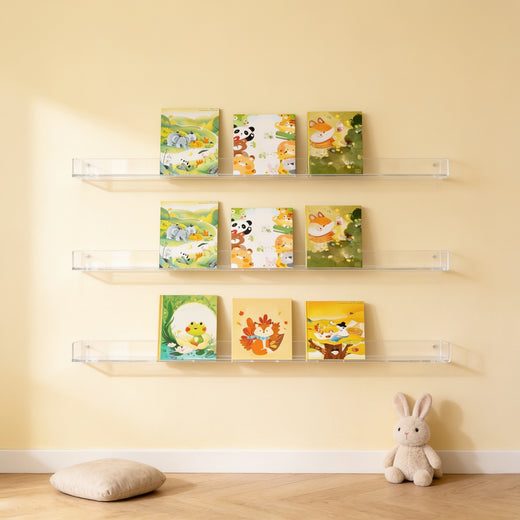
Floor space is the most precious thing in a small room, so move whatever you can up onto the walls. Books are the easiest win. Slim, clear picture book ledges are only 1.9 inches deep, hold books face out and take up zero floor. Each Aspen shelf is 17.7 inches long, and you can stack one, two or three.
A quick rule for anything on the wall: mount it away from the crib and the changing area, so nothing is within reach of little hands or could fall into a sleep space.
2. Choose one piece of furniture that does two jobs
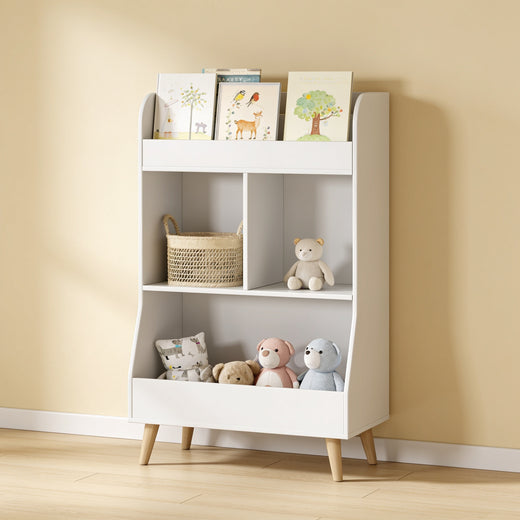
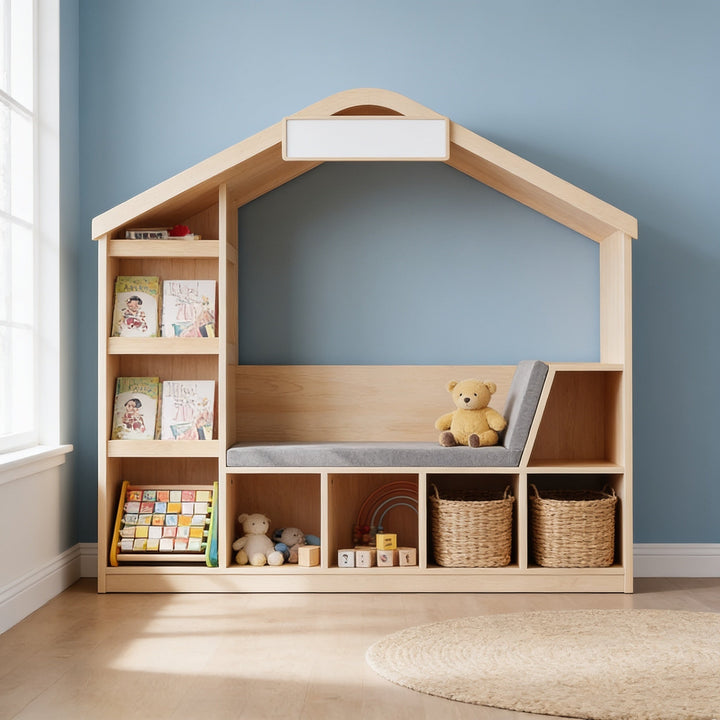
In a small room, every piece should earn its spot. A bookshelf with cubbies and a toy bin replaces a separate toy box, basket and bookcase. The Elm kids bookshelf is just 24.4 inches wide, with a 2-tier face-out book rack on top, two cubbies in the middle and a deep toy bin at the bottom. It fits beside a dresser or in a corner, and it comes with an anti-tip wall bracket (use it).
3. Put changing supplies in a caddy, not a cupboard
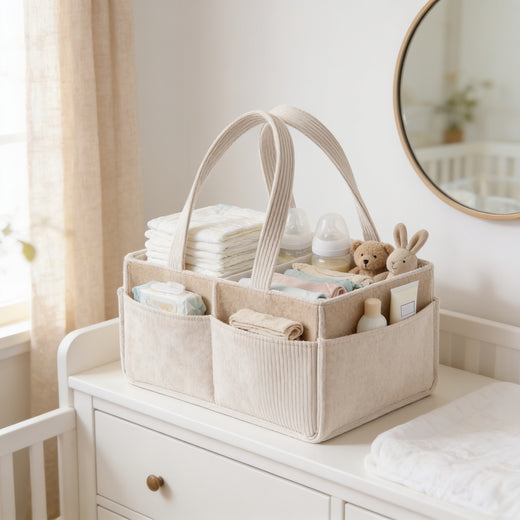
A full changing table isn't always realistic in a small room. Plenty of families change diapers on a pad on top of the dresser instead, with everything they need in one portable caddy. The Sorrel diaper caddy is 14.6 by 9.1 inches, with movable dividers and a carry handle, so the same kit can move to the living room when you do. We cover what to put in it in our diaper caddy guide.
4. Keep only today's things within reach
Small rooms fill up fast with things you'll need "eventually": the next size of clothes, the gifted toys, the spare blankets. Store those somewhere else, like the top of a closet or under a bed in another room, and keep only what you use this month in the nursery itself.
5. Light it softly
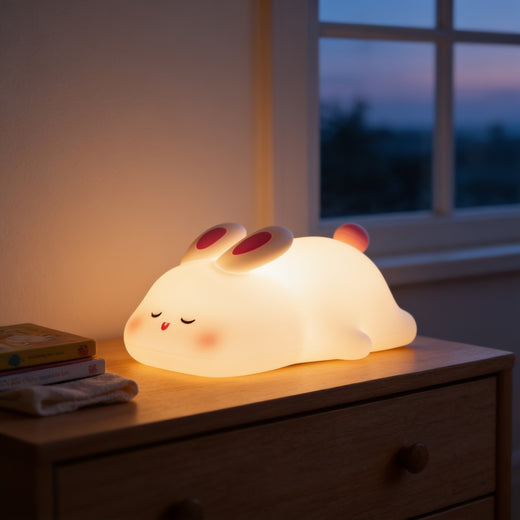
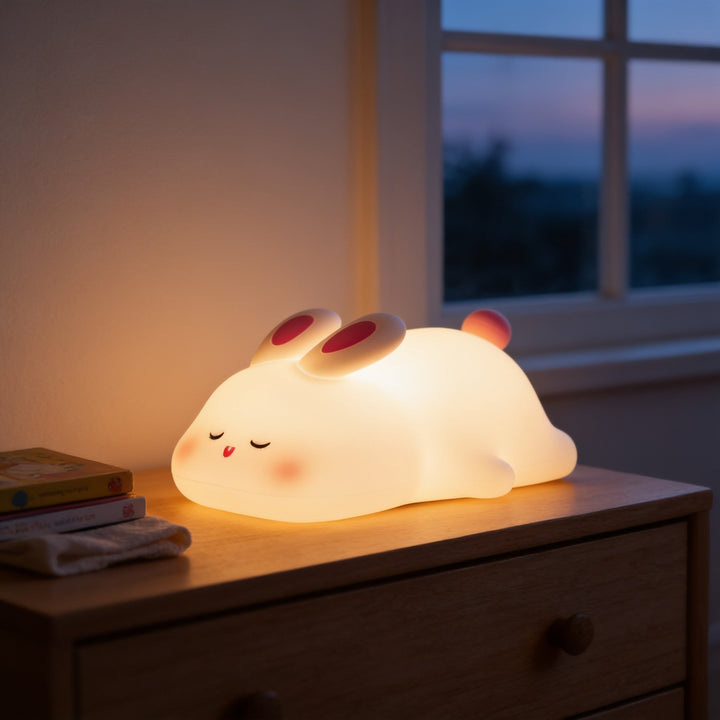
A small room lit by one bright overhead bulb feels even smaller, and it wakes everyone up during night feeds. A warm, dimmable lamp makes the room feel bigger and calmer. The cordless Glow night light taps on, has three brightness levels and runs about six hours per charge, so you can carry it where you need it. Keep it on a dresser or nightstand, out of the crib.
6. Decorate flat
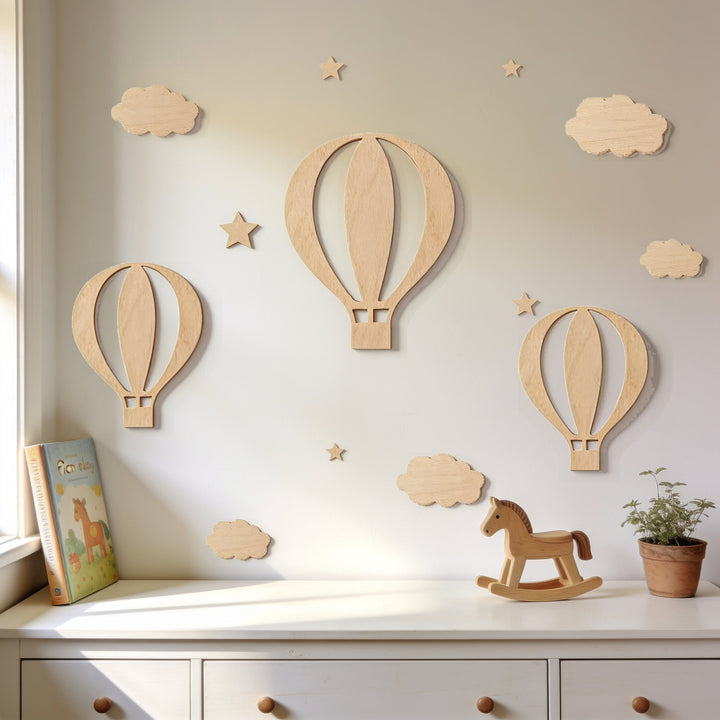
Decor doesn't have to take up space. Flat wall pieces add personality without a single shelf. The Lofty hot air balloon set is 13 flat wooden pieces (balloons, clouds and stars) that you can cluster above a dresser or reading corner. It's decor, not a toy, so hang it out of reach and away from the crib and changing table.
A small nursery checklist
- A safe sleep space that follows current safe sleep guidance
- A dresser, with a changing pad on top if you don't have a changing table
- One bookshelf or storage piece, anchored to the wall
- A diaper caddy
- A soft, dimmable light
- A comfortable spot for you to sit and feed
That's genuinely enough. Everything else can live in another room until you need it.
Questions parents ask
How much space does a nursery actually need?
Less than you'd think. A crib, a dresser, a chair and a narrow shelf fit comfortably in a small bedroom, and many families start with a bedside sleep space in their own room.
What can I skip in a small nursery?
A dedicated changing table, a toy box and a big bookcase are the usual space-eaters. A dresser-top changing pad, a caddy and wall ledges cover the same jobs.
Where should I put shelves in a nursery?
Away from the crib and the changing area, and always anchored or mounted securely. Keep anything heavy low.
Before your baby starts crawling, walk through our room-by-room babyproofing checklist.
For the walls, try these nursery wall decor ideas.
See calm, space-smart pieces in our Nursery collection.